The problem we were trying to solve
As teams grow, time tracking shifts from a personal activity to a shared operational process.
Managers needed a reliable way to close time periods and prevent late or accidental changes, while end users needed clarity about when time could still be edited and when it was considered final.
Before this work, there was no clear structure around time periods, no shared understanding of status, and no centralized way to manage or review completed timesheets.
Key constraints
Daily time logging needed to remain lightweight and uninterrupted.
Governance had to scale across teams with different cadences and rules.
The solution needed to work without forcing behavior changes on end users.
Success criteria
Managers could reliably close and review time periods.
Users clearly understood the status of their time and what was expected of them.
Governance added structure without adding friction to daily work.
Locked time periods
Manager perspective
The work was delivered iteratively, starting with a foundational governance layer and expanding into a full review workflow.
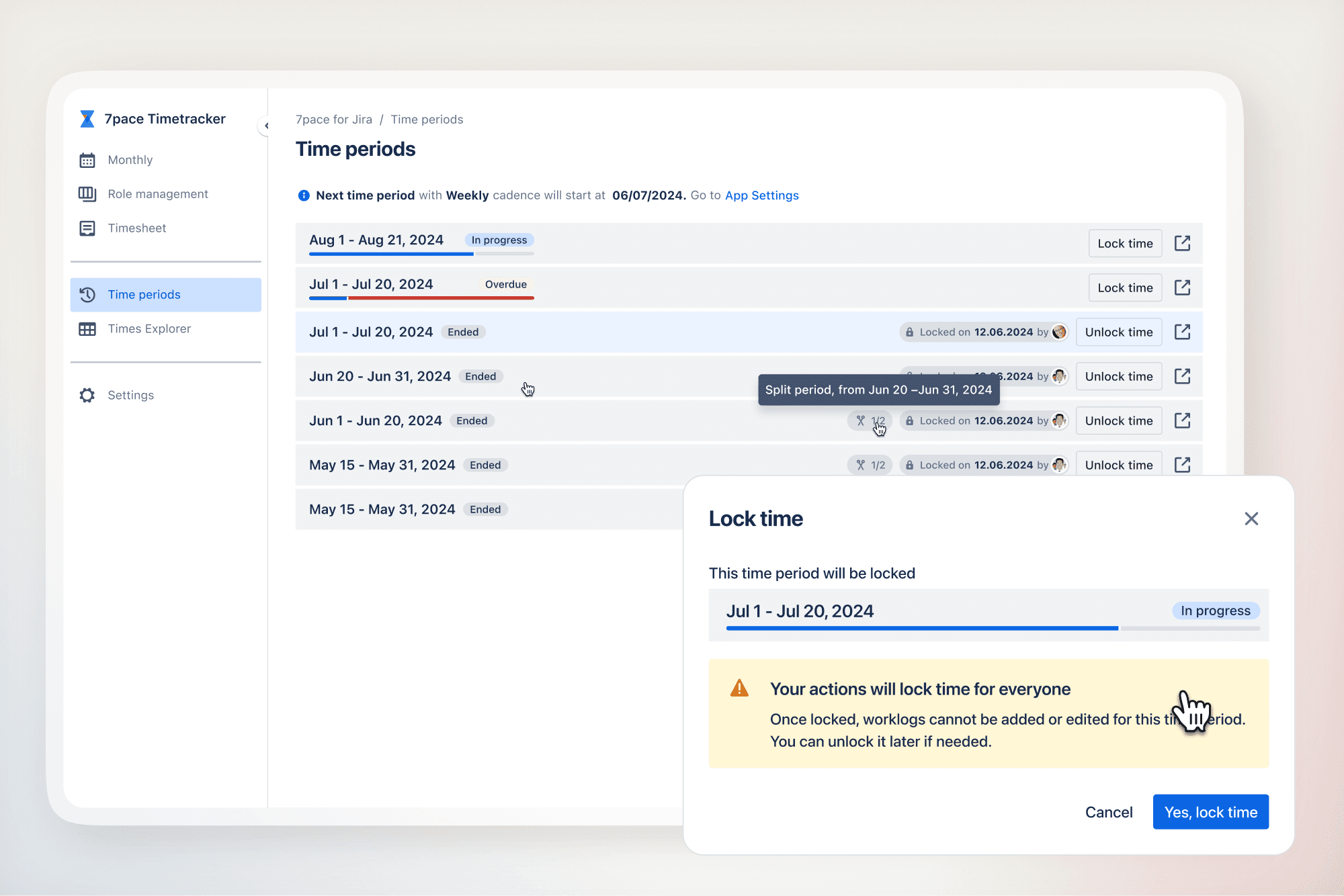
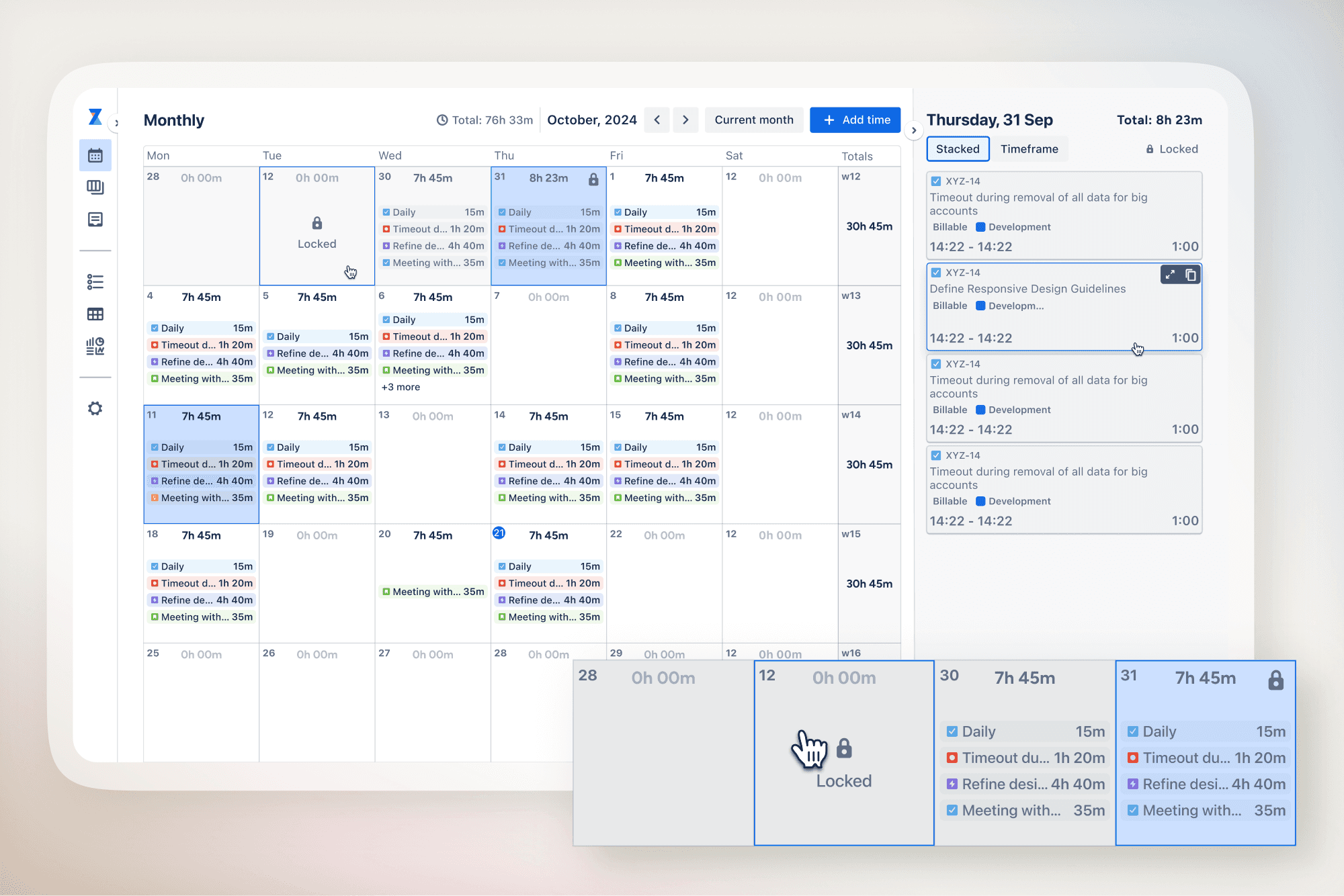
The first step was introducing locked time periods as a clear structure for managing time.
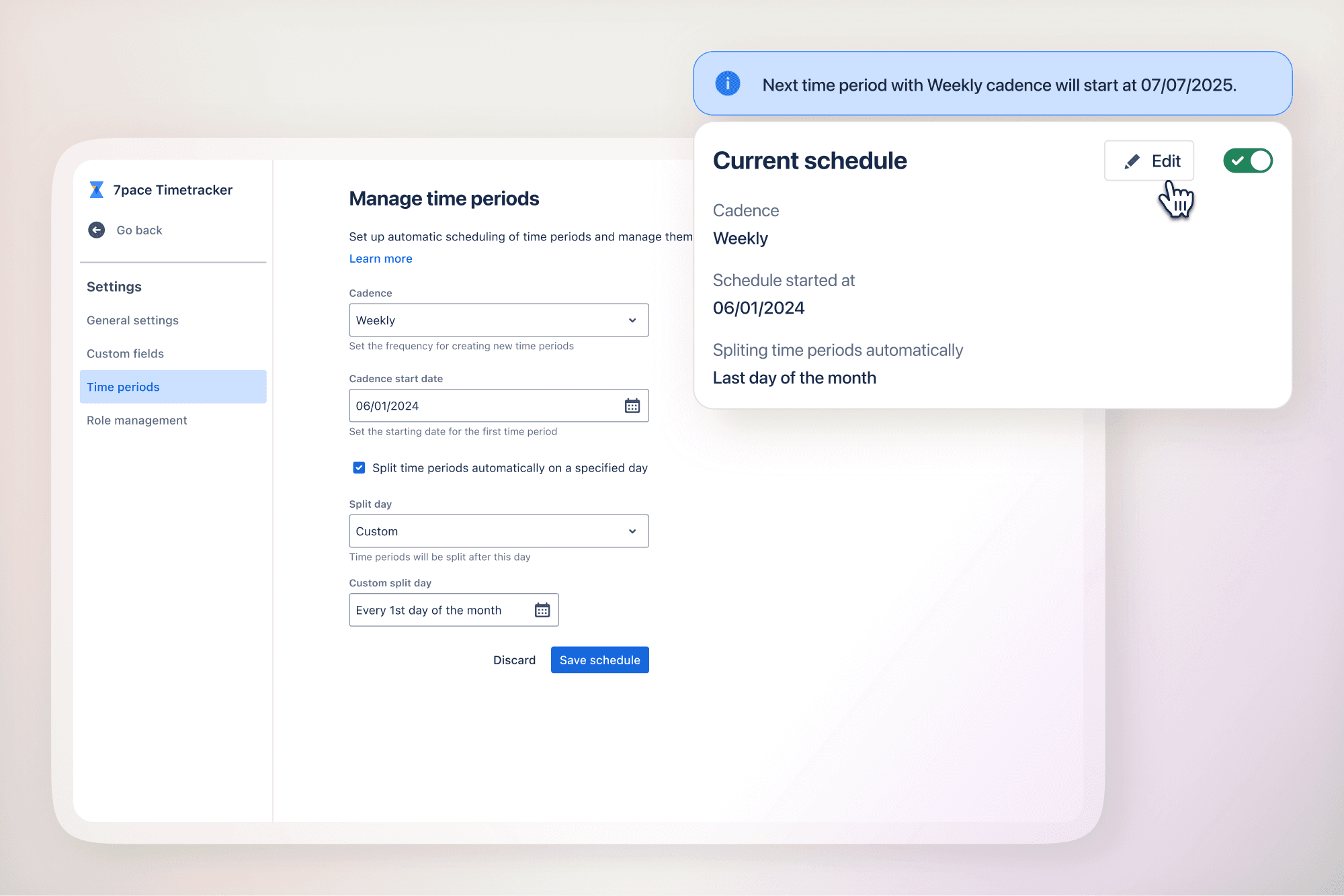
Managers could define schedules with a fixed cadence, controlling when periods start, end, and lock automatically
End user perspective
For end users, the impact was intentionally minimal.
Once a period became locked, time could no longer be edited, introducing a clear boundary without changing daily behavior.
This iteration focused on:
Defining and adjusting time period schedules
Viewing all periods in a single, centralized place
Locking or unlocking periods when needed
Seeing who locked a period and when
The goal was to establish a reliable foundation before adding more complex workflows.
Approvals and visibility
Manager perspective
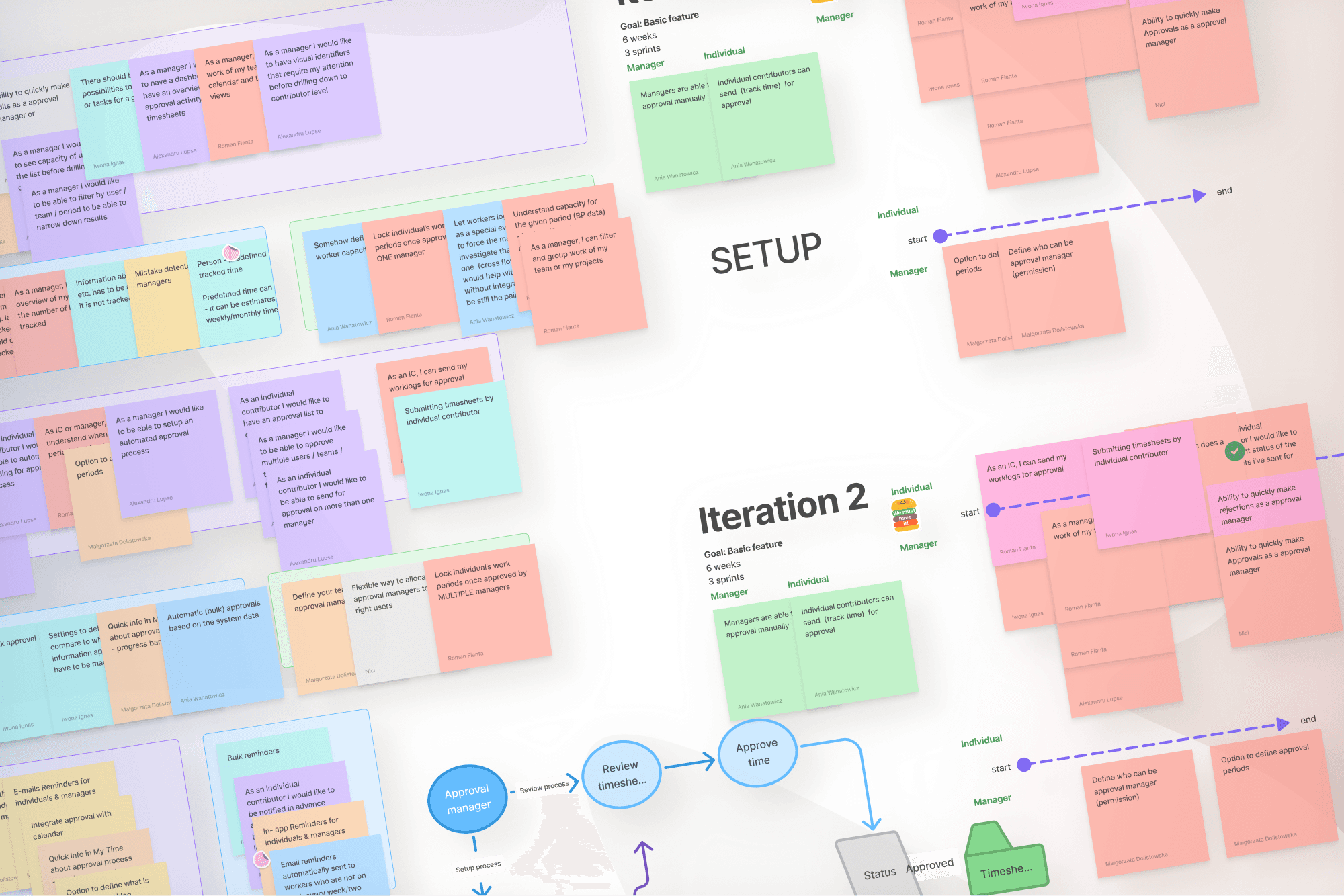
User interviews showed that locking time alone wasn’t sufficient.
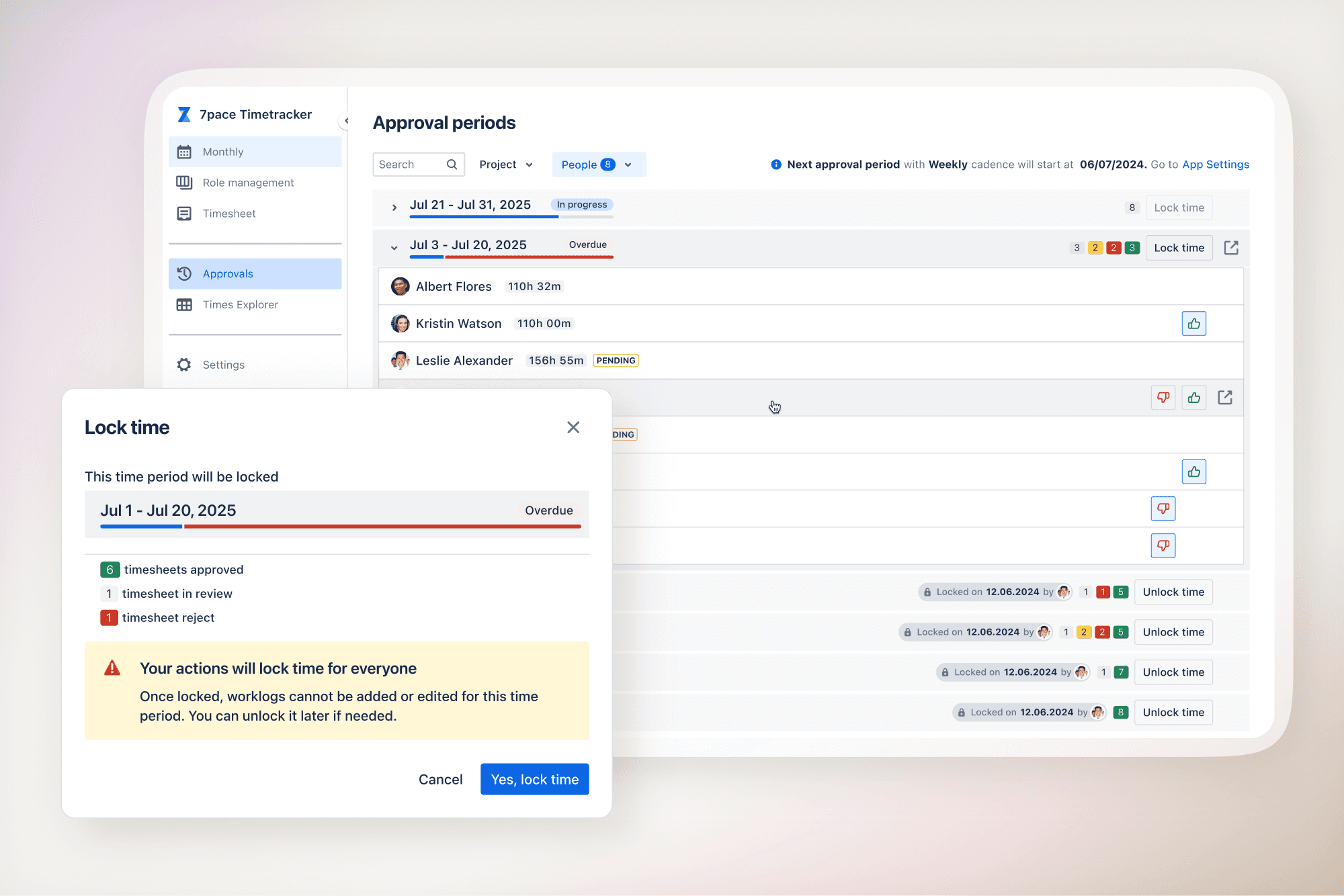
Managers needed visibility into who had submitted time, who was overdue, and whose time was approved.
The second iteration introduced approvals, turning locked periods into an active review flow.
End user perspective
For end users, approvals added clarity and ownership.
Users could see the status of their time
Submit periods when ready
Understand manager expectations more clearly
This iteration focused on:
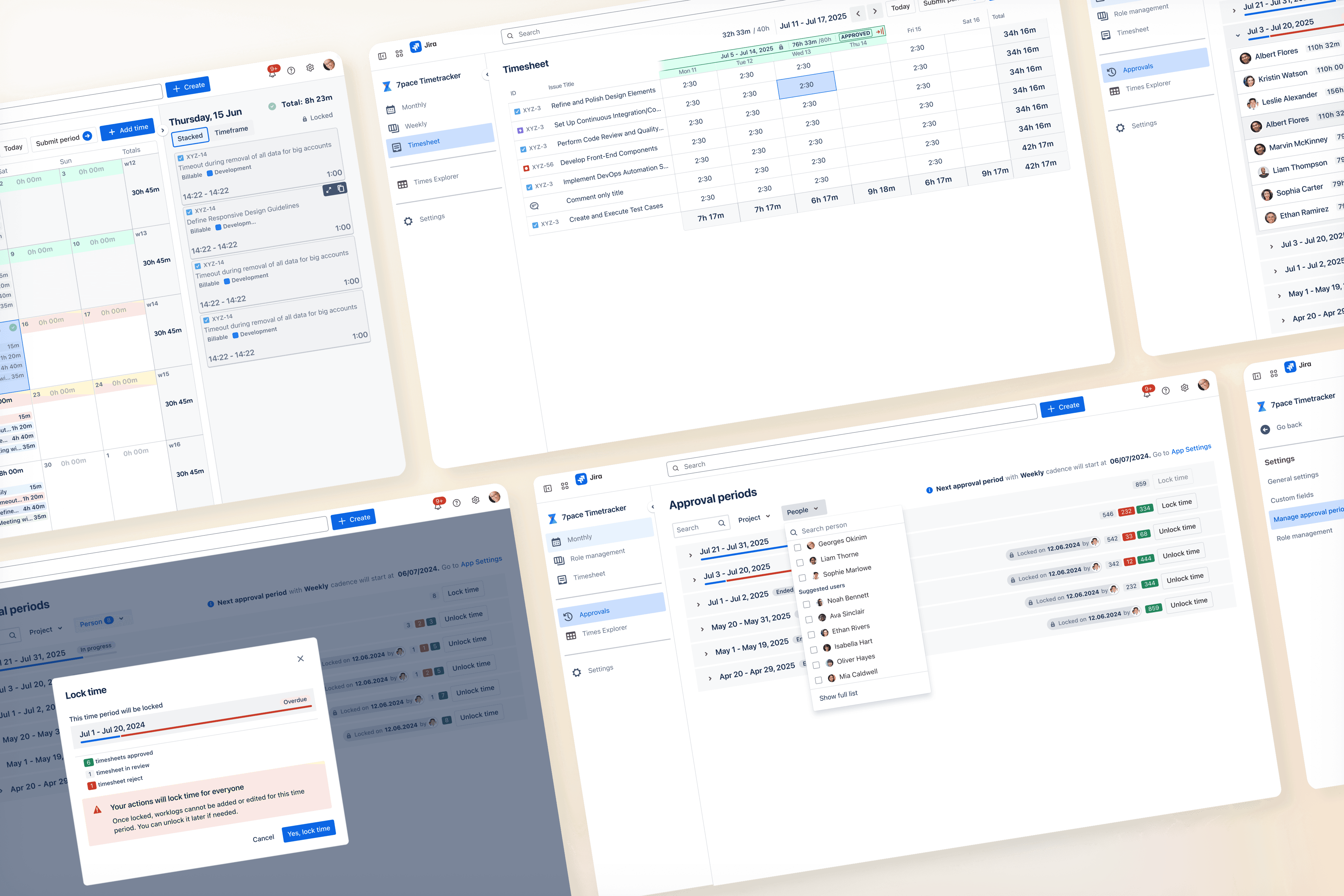
Individual timesheet submissions within a period
Clear status indicators for submitted, approved, and overdue time
A centralized view for reviewing and approving time
Greater control over approval schedules
The focus shifted from restriction to oversight and coordination.
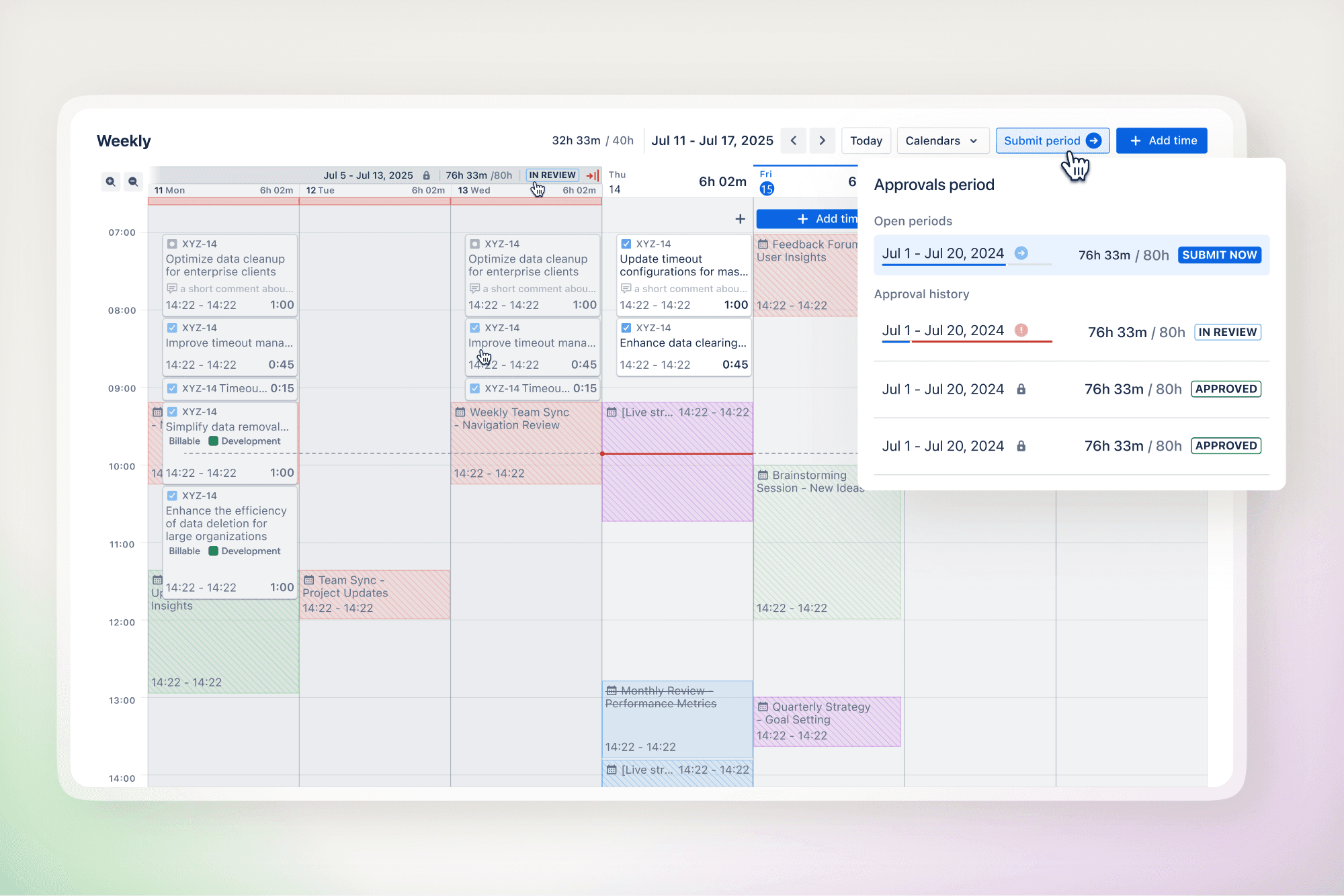
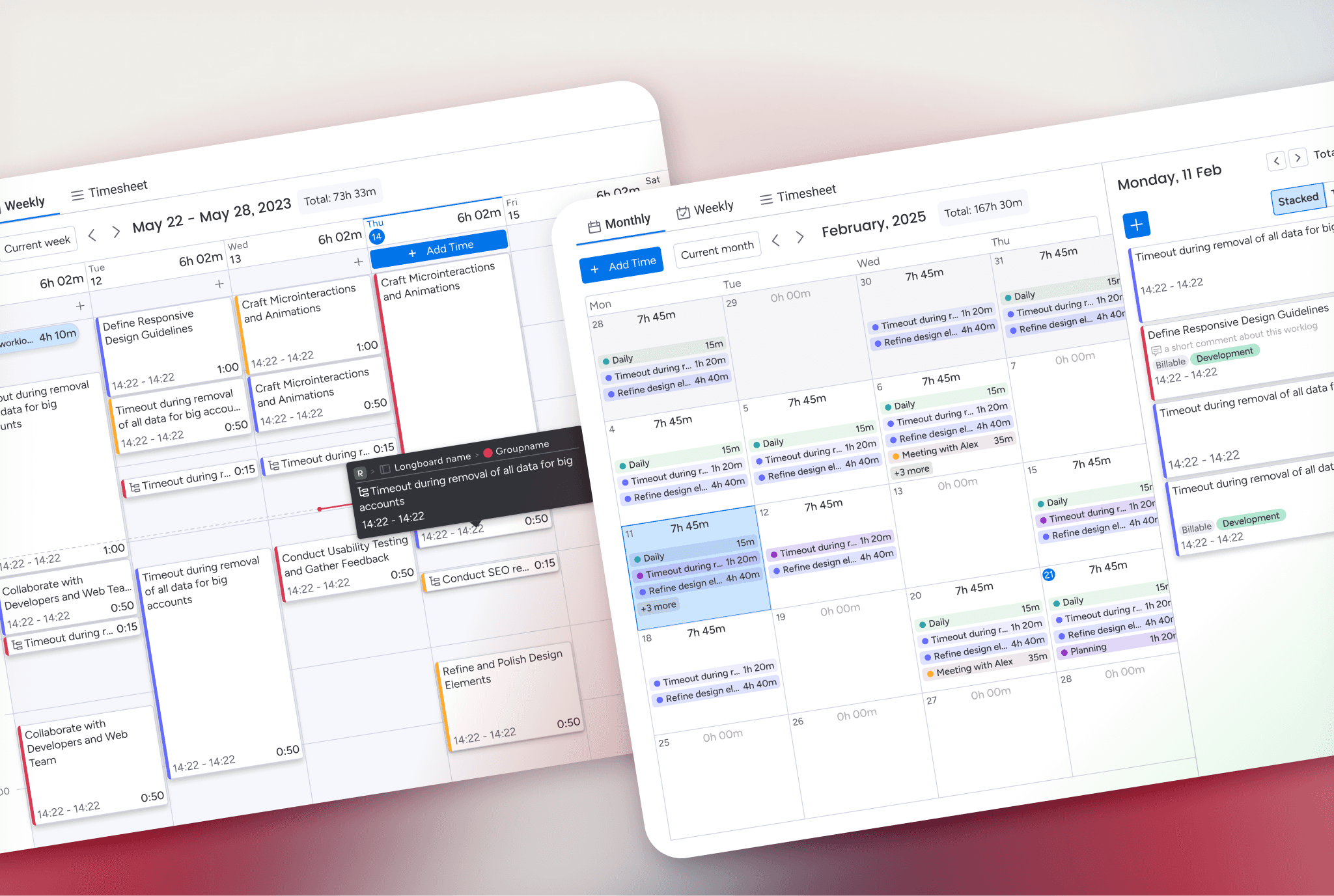
The result is two complementary views:
Weekly View for fast, hands-on time entry
Monthly View for broader overview with the ability to drill into daily details
Both share the same interaction patterns, making it easy to move between them and keeping the experience consistent across the application.
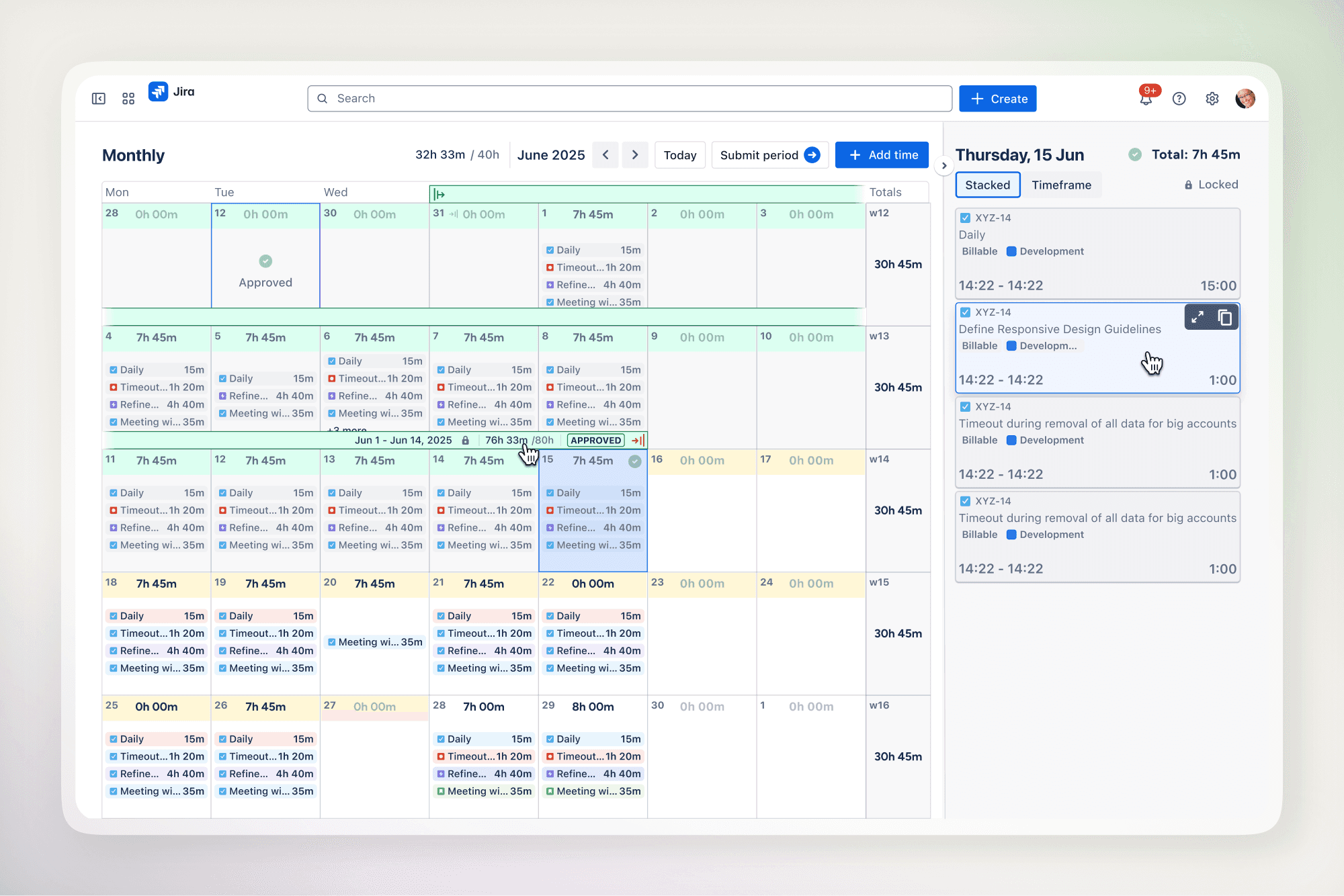
This project introduced a structured governance layer for time tracking by combining locked time periods with approvals in a single, predictable workflow.
Managers can define schedules, close periods automatically, review submissions, and approve time from a centralized view, with clear visibility into what is ready, overdue, or completed.
For end users, time tracking gained clear boundaries and status feedback. Users can see when time is still editable, when it is locked, and when it has been approved, without disrupting their daily logging habits.
The result is a governance model that adds accountability and coordination while keeping everyday time entry lightweight.
What this project reinforced
Structure enables trust
Clear boundaries and visible status reduce uncertainty for both managers and contributors.
Governance should be additive
Introducing control layers works best when they build on existing behavior rather than replacing it.
Clarity scales better than enforcement
Making expectations visible proved more effective than relying on strict restrictions alone.